


Beachwear is useful when a swimsuit on its own is not quite enough. On the way to the beach, by a hotel pool, at a beach bar or during a walk along the promenade, you may want to feel comfortable while still looking put together. A well-chosen cover-up, tunic, shirt or dress can cover exactly what you want it to cover without taking away the relaxed holiday feel of the outfit.
Key points
- For a quick walk from the beach, a cover-up, sarong, kimono or light shirt will usually be enough.
- For a beachside restaurant, a beach dress, long skirt or coordinated set will look more appropriate.
- With a bikini, tunics, skirts, kimonos and sheer dresses work well.
- With a one-piece swimsuit, an open shirt, long dress, skirt or light beach trousers can look more complete.
- In strong sun, choose styles that genuinely cover the shoulders, back or thighs, not just decorative pieces.
What is beachwear?
Beachwear means clothing worn over a swimsuit or alongside it. It does not replace a normal wardrobe, but it helps you move from the beach into a slightly more dressed setting: a promenade, bar, hotel lobby, poolside breakfast or holiday walk.
This category includes beach dresses, tunics, shirts, cover-ups, kimonos, sarongs, skirts, sets, short shorts and light trousers. Some styles are almost transparent and mainly decorative. Others offer more coverage and can be worn comfortably at a table away from the beach itself.
Good women’s beachwear should be light, comfortable, easy to put on and suited to what you actually do on holiday. You need a different style for a sun lounger, a boat trip and the walk from your hotel to the beach.
Types of beachwear
The easiest way to choose beachwear is by function. Some pieces are quick to throw on, while others build a more complete outfit. There is no single best cut for everyone.
| Type | Best for | What to watch out for |
|---|---|---|
| Beach dress | Walks, beach bars, holiday outfits | Not every dress sits well over a wet swimsuit |
| Beach tunic | Throwing quickly over a bikini or swimsuit | If it is too short, it may ride up while walking |
| Beach shirt | One-piece swimsuits, bikinis, shorts | Very thin fabric can be too transparent away from the beach |
| Cover-up or kimono | Shoulders, poolside wear, evenings near the beach | Long sleeves can get in the way in strong wind |
| Sarong or skirt | Bikinis, hips, quick coverage for the lower body | The tie needs to stay secure when you move |
| Beach set | Holiday outfits, photos, lunch near the beach | It is not always the most practical choice for swimming or changing |
Beach dresses
A beach dress is the most “dressed” option. It works when you want to go from the beach to a café, return to the hotel or look more complete without changing into a regular dress.
A slim-fit maxi knit beach dress is one example of a beach style that can look more polished while still feeling holiday-ready. Beach dresses can be short, long, openwork, knitted, tied, slit or more fitted. The length is not the only difference. A loose mini dress, a crochet dress and a long slit dress will all behave differently on the body.
Mini beach dress
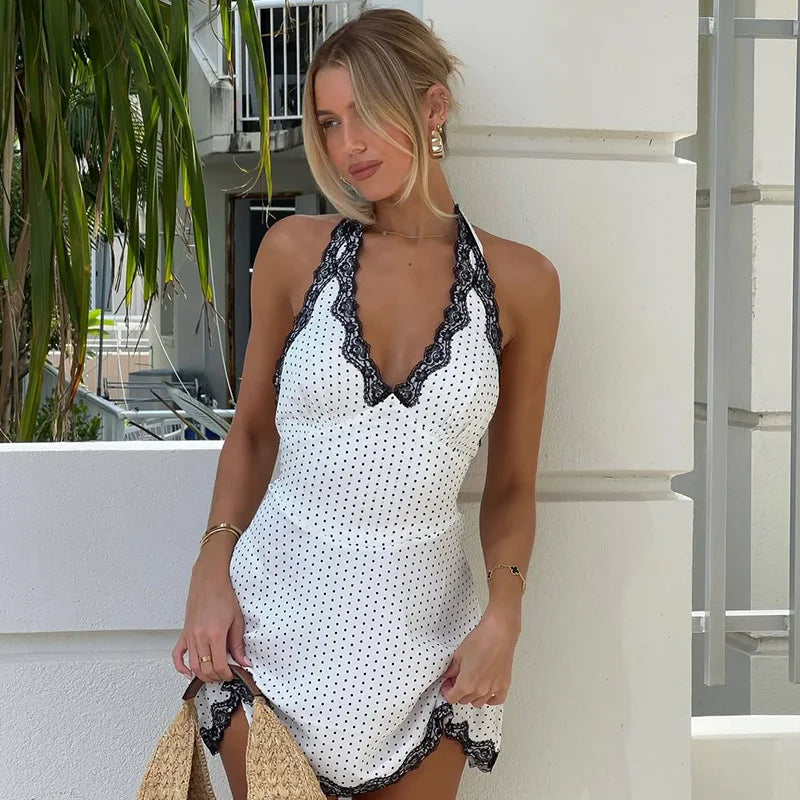
A short dress is useful for moving quickly from a lounger to a bar, walking along the beach or going from the hotel to the water. It is easy to take off, takes up little space and does not drag through the sand.
A fitted feminine mini beach dress can work for this kind of relaxed beach styling. With short designs, check whether the fabric rides up too much when you walk and whether the bottom is too narrow around the hips.
Long beach dress
A long dress offers more coverage and looks more elegant. It works for a holiday walk, dinner close to the beach or leaving the hotel when you do not want to change into a full outfit.
Styles with a slit are usually more comfortable than narrow, straight cuts that reach the ankles. They give more freedom when walking and do not restrict your stride. A lightweight slit maxi beach dress is a good example of this type of beachwear.
Openwork and crochet beach dresses
An openwork or crochet dress looks best when the swimsuit underneath is chosen carefully. The transparency is part of the style, so the bikini or one-piece becomes part of the whole outfit.
This type of dress is not designed to cover the body completely. If you need more freedom away from the beach, choose a less transparent fabric or add a light shirt.
Women’s beach tunic
A women’s beach tunic is looser than a dress and usually shorter. It is a good choice when you want to throw something over a bikini quickly, but do not need a fully styled outfit.
A tunic works especially well with classic swimwear: a triangle bikini, a high-waist swimsuit, a one-piece or a simple black swimsuit. It feels light and easy, without needing to be closely fitted to the body.

What should you check?
A good tunic should not restrict the shoulders, cling tightly to the hips or roll up when you sit down. If the fabric is very openwork, treat it as a beach cover-up rather than a dress for a restaurant.
Beach shirt
A beach shirt is one of the most versatile holiday pieces. You can wear it open over a swimsuit, tie it at the waist, throw it over your shoulders or pair it with a beach skirt.
A women’s beach shirt works well with one-piece swimsuits because it leaves the front of the costume visible while giving more coverage over the shoulders and back. With a bikini, it works particularly well when the bikini bottoms are high-waisted or have a colour worth showing.
The most comfortable option is a light, breathable fabric, but not one that is too thin if you plan to leave the beach. A very sheer shirt can look good by the water, but may offer too little coverage in a hotel restaurant.
Women’s beach cover-ups
Women’s beach cover-ups are useful when you want to cover the shoulders, back or hips without putting on a full dress. This group includes kimonos, light robe-style cover-ups, openwork tops and loose open-front styles.
A cover-up works by the pool, on a lounger, during a short walk and in the evening when it gets cooler. It can also make a very cut-out swimsuit feel easier to wear away from the water.
Beach kimono
A kimono looks good with a bikini, a one-piece swimsuit and a simple beach dress. It has a loose cut, so it does not cling to a wet swimsuit and does not need to be fitted exactly at the waist.
With longer styles, pay attention to the wind. A very light fabric can lift and tangle around the legs. On the beach this is not usually a problem, but for cycling, a boat trip or a longer walk, a shorter cut or a waist tie will be more practical.
Cover-up or beach robe?
Some cover-ups look like a thin robe. This is useful by a hotel pool because it is easy to put on after swimming and quick to take off before going back into the water.
This type of style should have a belt or tie that actually stays in place. If the cover-up keeps opening, you will need to adjust it with every movement.
Skirts and sarongs
A beach skirt or sarong works best when you want to cover the lower body while leaving the top of the swimsuit visible. It is a good choice with bikinis, bandeau tops and one-piece swimsuits with an interesting neckline.
A tied beach skirt gives more control than a classic sarong because it has a clearer shape. You can adjust it to the hips, set the height of the tie and remove it easily before going into the water.
A sarong is more flexible. You can tie it on the hips, at the waist, under the bust or over one shoulder. Its drawback is simple: if the fabric is very smooth, the knot can loosen.
Beach sets
A beach set looks more styled than a single cover-up. It might include a top and skirt, a bikini with an extra layer, a blouse and shorts or a dress with a cover-up.
A high-waist bikini set with tie skirt is practical if you want a ready-matched look. You do not need to choose the top, bottom and cover-up separately.
The downside of sets is that they are less flexible. The top may fit perfectly while the bottom fits less well, or the other way round. Before buying, check not only the swimwear size but also the measurements of the extra pieces.
Beachwear over a swimsuit
The best result comes from matching the beachwear to the cut of the swimsuit. It is not about creating a perfectly colour-matched set. It is about proportion. A different cover-up suits a bikini than a one-piece or a swimsuit with strong cut-outs.
| Swimwear | What to wear over it | Why it works |
|---|---|---|
| Bikini | Sarong, skirt, tunic, kimono | You can cover the lower body or shoulders while still showing the swimsuit cut |
| High-waist bikini | Short shirt, open kimono, openwork dress | The high waist stays visible and helps balance the silhouette |
| One-piece swimsuit | Long shirt, skirt, beach trousers, button-front dress | The swimsuit can work like a bodysuit in a holiday outfit |
| Swimsuit with cut-outs | Simple cover-up, light skirt, plain shirt | The beachwear does not compete with the swimsuit details |
| Plus-size swimsuit | Tunic, long dress, kimono, shirt | It gives ease without hiding the whole body |
If you are still choosing your swimwear, start with the cut. Bikinis are easy to style with sarongs, skirts, kimonos and beach dresses. Swimsuits work well with open shirts, long skirts, light trousers and more dressed beach outfits.
If you want more coverage, more support or a style that feels secure, the guide to choosing a plus-size swimsuit may also be useful.
Beachwear and body shape
Beachwear does not have to “hide” the body. It is more useful to think of it as a way to set proportions. Length, ties, slits and transparency can change what the eye notices first.
If you want to make the legs look longer
Choose shorter dresses, skirts tied higher at the waist or styles with a slit. A cover-up that is longer at the sides but does not fully cover the legs at the front can also work well.
Avoid skirts that end exactly at the widest part of the calf if you do not want to shorten the silhouette. Mini lengths, midi styles with a slit or light long dresses usually work better.
If you want to cover the stomach
A tunic, an open shirt, a looser dress or a sarong tied slightly higher can work well. The fabric should not cling tightly to a wet swimsuit, because then it will outline everything rather than soften the area.
A high-waist swimsuit with a shorter cover-up can also be a good solution. The waist remains defined, but the stomach is not fully exposed.
If you want to cover the shoulders
Choose a beach shirt, kimono or cover-up with sleeves. This is practical not only visually, but also in strong sun and wind.
If your shoulders are broad and you do not want to emphasise them, soft dropped sleeves and a V-neckline usually work better than stiff, short sleeves.
If you want to define the waist
Look for styles with a tie, belt or fabric you can knot at waist level. A shirt tied at the front, a sarong tied at the side or a dress with a defined waist can shape the proportions better than a completely loose cover-up.
Beachwear fabrics
The fabric decides whether the piece will be comfortable in the heat, whether it dries quickly, whether it sticks to a wet swimsuit and whether it works beyond the beach itself. How it looks in a photo is not enough.
Openwork and crochet
Openwork and crochet styles look good over a swimsuit because they show the colour of the swimsuit and the skin underneath. They feel light, summery and good for holiday photos.
But openwork fabric does not give full coverage. If the dress or tunic is very sheer, treat it as a beach piece rather than clothing for every setting.
Mesh and transparent fabrics
Mesh works well for more fashion-led beach outfits. It looks good over a simple bikini or one-piece because it does not hide the swimsuit cut.
With very fine mesh, check the seams and finish. A size that is too small can stretch the fabric, distort the pattern and make the whole piece look cheaper than it should.
Knitted beachwear
A knitted dress or set gives a softer, more clothing-like effect. It sits closer to the body than a loose kimono, so the size needs to be right.
If the knit is heavier, it may behave less well over a wet swimsuit. For the beach, choose pieces that do not stretch too much or lose their shape after a few hours of wear.
Light shirt fabrics
Shirt fabrics are practical because they can be thrown on, unbuttoned, tied or worn with rolled-up sleeves. They also give more coverage than mesh or openwork fabric.
Looser cuts work best. A fitted shirt will quickly cling to a wet swimsuit and restrict movement.
Colour and pattern
The colour of your beachwear should work with the swimsuit, but it does not need to be identical. Sometimes a contrast looks better than a full set in the exact same shade.
Simple combinations
- a black swimsuit with a white cover-up gives a clean, classic effect,
- beige, cream and brown look good with natural accessories,
- a colourful bikini can be balanced with a plain dress,
- a simple one-piece works well with a patterned kimono,
- white crochet suits many swimsuit colours.
If the swimsuit has a bold print, the cover-up can be calmer. If the swimsuit is simple and plain, you can choose a more expressive dress, kimono or skirt.
Beachwear and sun protection
Beachwear can help cover the skin, but not every fabric protects in the same way. A loose, fine openwork style may look beautiful, but it lets through a lot of light. A denser weave, darker colour and more coverage will usually offer better protection than a very thin, transparent cover-up.
If you are planning a long walk in strong sun, choose a shirt, kimono or dress that genuinely covers the shoulders and back. Exposed areas still need sun cream. A hat and sunglasses are useful too.
Important
A beach cover-up does not automatically work like clothing with a UPF rating. If sun protection matters to you, check the manufacturer’s information and do not treat transparent styles as full protection.
What should you pack for a holiday?
For a week away, you do not need a separate cover-up for every swimsuit. It is better to pack a few pieces that give you different options.
A practical holiday set
- one light beach shirt,
- one beach dress that can be worn away from the sand,
- one cover-up or kimono for the pool,
- a sarong or tied skirt,
- one one-piece swimsuit that can work like a bodysuit,
- one bikini for sunbathing and quick drying.
This gives you several outfits without overfilling your suitcase. A shirt works with a bikini and a one-piece, a skirt changes the feel of the same swimsuit, and a beach dress is useful whenever you go further than the lounger.
What should you avoid?
Very heavy fabrics
A thick knit may look good in a photo, but after contact with water it can become heavy and uncomfortable.
Tunics that are too tight
A tunic should give ease. If it clings to the hips and rides up with every step, it is not doing its job.
Cover-ups with no real function
If a piece does not cover, shape the silhouette or work with the swimsuit, it will probably just get in the way.
Too many ties at once
A halterneck bikini, sarong, belted shirt and bag with long cords can look messy together.
Clothing made only for photos
On holiday, you also need to walk, sit down, deal with wind, sand, wet swimwear and quick changes.
How to wash beachwear
Beachwear comes into contact with sea salt, chlorine, sand, sun cream and sweat. All of this can affect the colour, elasticity and appearance of the fabric.
Safe care rules
- shake off sand before putting beachwear into your bag,
- do not leave a wet cover-up rolled up all day,
- check the washing symbols on the care label,
- wash openwork fabric and mesh carefully, ideally in a laundry bag,
- do not wring out thin fabrics aggressively,
- strong sun can speed up colour fading while drying.
If the piece has fringes, ties or a delicate weave, wash it separately from clothes with zips, hook-and-loop fastenings and metal details. This helps reduce snagging.
FAQ
What should you wear over a swimsuit?
The easiest options are a beach dress, tunic, shirt, kimono, sarong or tied skirt. The best choice depends on whether you are only going to the beach or also planning a walk, lunch or time by the pool.
What is the difference between a beach tunic and a beach dress?
A tunic is usually looser, shorter and more beach-focused. A dress gives a more complete look and often works better away from the lounger.
Does a beach shirt work with a bikini?
Yes. A beach shirt works well with a bikini, especially worn open, tied at the waist or thrown over the shoulders.
Which beachwear covers the stomach?
A tunic, loose dress, open shirt or sarong tied higher at the waist can work well. The fabric should not be too tight or cling to a wet swimsuit.
What should you wear over a one-piece swimsuit?
An open shirt, long skirt, kimono, beach dress or light trousers all work well with a one-piece swimsuit. The swimsuit can then act like a bodysuit in a summer outfit.
Does a beach cover-up protect you from the sun?
It can partly cover the skin, but it depends on the fabric, colour, weave and level of transparency. Sheer and openwork styles do not replace UPF-rated clothing or sun cream.
What beachwear works well for plus size?
Tunics, dresses with a looser lower half, kimonos, shirts and sarongs tied where you want to define the waist can all work well. The most important thing is that the piece does not cling to a wet swimsuit or restrict movement.
Beachwear at Pelie.co.uk
A good beach outfit does not need to be complicated. You only need a swimsuit that fits well and one layer chosen for the situation: a dress, tunic, shirt, kimono or skirt.
At Pelie.co.uk, you can choose beachwear to wear with a bikini, one-piece swimsuit, poolside outfit or holiday look. The best piece is the one that suits not only the swimsuit, but also the way you actually spend time by the water.
Bibliography
- American Academy of Dermatology Association, What to wear to protect your skin from the sun.
- The Skin Cancer Foundation, Sun-Protective Clothing.
- The Skin Cancer Foundation, Your Daily Sun Protection Guide.
- GINETEX, Care symbols.
- GINETEX, Textile care symbols.


