


Choose a sports bra according to the type of movement and the intensity of your workout. For a gentle yoga session, light or medium support will often be enough, while running and exercises involving repeated jumps require a more stable construction. Size matters too: even a highly supportive-looking sports bra will not work properly if the band rides up at the back or the cups are too small.
Key points
- Yoga and Pilates: usually light or medium support, depending on the pace of the session and the size of your bust.
- Weight training and cycling: usually medium support with a stable underband that stays in place as you change position.
- Running and HIIT: high support designed for dynamic movement and exercises involving jumps.
- Good fit: the band sits level around the body, the breasts are fully contained and the straps do not slip or dig into the shoulders.
- Fit test: raise your arms, bend forwards and do a squat. For more dynamic workouts, add a few jumps or a short run on the spot.
Sports bra support levels
The terms light, medium and high support describe how much a sports bra limits breast movement. Different brands may classify similar designs differently, so the support level stated on a product page should be considered alongside the construction of the bra and a simple movement test. When comparing sports bras, check the size guide for the individual model as well.
Support that is too light for a dynamic workout can lead to excessive breast movement and leave you repeatedly adjusting your bra. Very firm compression, on the other hand, is not necessary for every low-intensity activity, particularly if it restricts comfortable breathing or movement during floor-based exercises.
Light support
Light support is intended mainly for gentle movement without running or repeated jumping. A sports bra in this category may have a more flexible construction, a simpler shape and narrower straps. It is generally suited to stretching, gentle yoga, Pilates and walking.
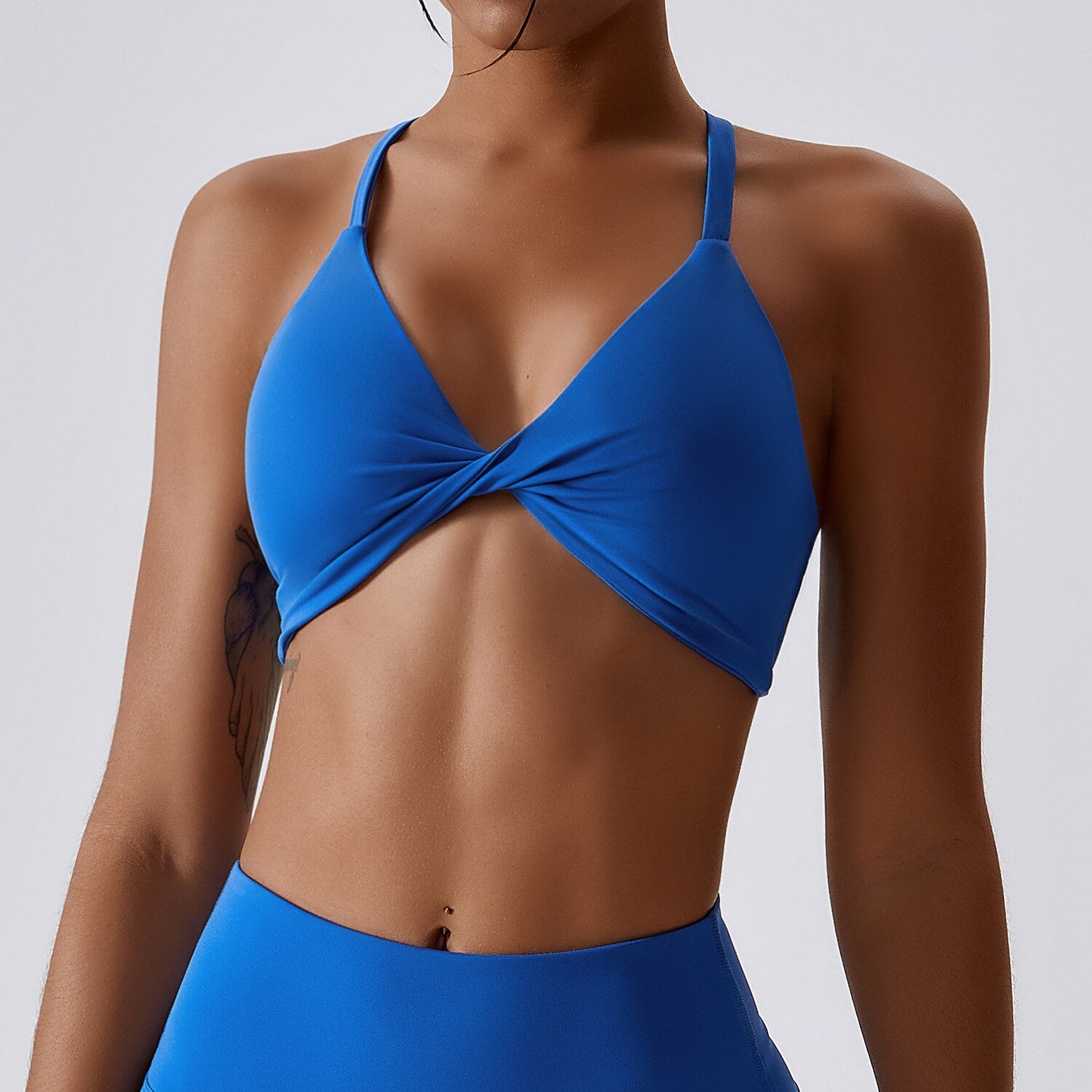
For a fuller bust, light support may not feel stable enough even during a floor-based workout. Medium support can then be a better starting point. The Triangle Sports Bra available from Pelie is made with double-layer fabric and comes in sizes S–XL, but its product page does not specify a particular support level. It is therefore worth testing the bra with movements similar to those in your planned workout.
Medium support
Medium support is often a suitable choice for weight training, exercise bikes, road cycling and workouts that involve relatively little jumping. These sports bras generally have a wider underband, more stable straps and greater coverage than light-support styles. The fabric should move with the body without stretching so much that the band shifts during exercise.
High support
A high-support sports bra is designed for running, dynamic fitness classes, HIIT and other activities involving frequent jumping. These designs may use fuller cups, a higher neckline, an adjustable band and wider or adjustable straps. The construction may compress the breasts towards the chest, support each breast in a separate cup or combine both approaches.
The word “sports” does not tell you the level of support.
If the manufacturer does not state which intensity the bra is intended for, do not assume that a more covering design is automatically suitable for running. Check the band, cups and the way the bra behaves during movement.
| Activity | Support level | Features to check |
|---|---|---|
| Yoga and stretching | Light or medium | Flexible fabric, a comfortable underband and edges that do not dig in during floor poses |
| Pilates | Light or medium | A secure neckline, unrestricted arm movement and no hard components pressing into the back |
| Weight training | Usually medium | Stable underband, suitable coverage and straps that stay in place when the arms are raised |
| Exercise bike or road cycling | Usually medium | Fabric suited to managing moisture, stable straps and a band that does not roll when leaning forwards |
| HIIT and fitness with jumps | High | A wider or adjustable band, fuller coverage and more controlled stretch |
| Running | High | Stable underband, full cups or a combination of cups and compression, plus wider or adjustable straps |
Which sports bra should you wear for each workout?
The type of activity helps you identify an appropriate level of support, but it does not replace trying the bra on. Your actual workout plan matters too. A controlled weights session places different demands on a sports bra from jumping jacks, running on a treadmill or interval training.
Yoga and Pilates
During gentler sessions, freedom of movement and a secure neckline are particularly important. Bend forwards, raise your arms and move into a position similar to downward-facing dog. Your breasts should not move out of the top or sides of the bra, and the band should not travel upwards towards your shoulder blades.
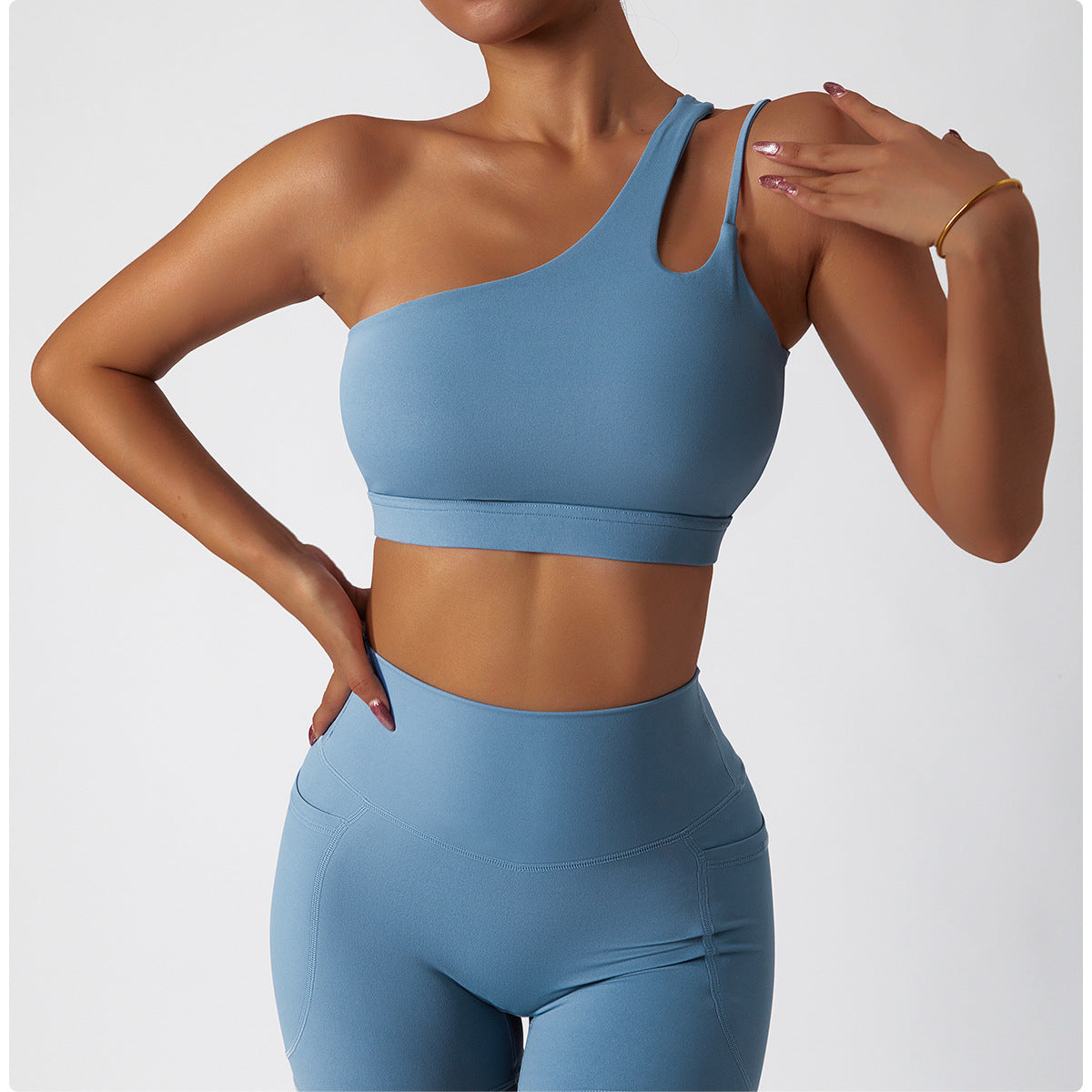
For floor exercises, check the back of the bra too. Hooks, zips and hard adjusters may become uncomfortable when you lie on your back. The one-shoulder sports bra top has an asymmetrical neckline, added bust support and comes in sizes S–XL. With an asymmetric design like this, raise both arms above your head to check whether the neckline stays securely in place.
Weight training
For squats, machine exercises and controlled resistance training, medium support is often a sensible starting point. However, check the bra while pressing overhead, bending forwards and lying on a bench. The band should remain level, while the straps should allow your shoulder blades to move freely.
If your workout also includes burpees, skipping or treadmill running, choose the level of support according to the most dynamic part of the session. A bra that feels perfectly stable during controlled lifting may not provide enough support once jumping or running is added.
Cycling
Medium support is generally suitable for an exercise bike or road cycling. Pay particular attention to the underband: when you lean forwards towards the handlebars, it should not roll or press uncomfortably against the ribs. The straps should remain in position while your arms are extended forwards for longer periods. Off-road cycling or routes with more vibration may call for firmer support.
Running and HIIT
A sports bra for running should provide high support and limit breast movement in different directions. A standing fit check is not enough. Run on the spot for a short time, do a few jumps and rotate your torso. Check that the band does not ride up, the neckline remains secure and the straps do not loosen.
Use similar criteria for HIIT if the workout involves jumps and quick changes of direction. If you feel the need to hold your breasts or repeatedly adjust the bra during your test, try a more supportive construction or a different size.
How should a sports bra fit?
Measuring around your ribcage under the bust and around the fullest part of your bust can help you identify a starting size. Our guide on how to find your bra size explains how to take these measurements and how to recognise common signs of an unsuitable cup size. With a sports bra, however, fit should also be assessed while you move.
Underband
The underband should feel secure and sit at the same level around the front and back of your body. Raise your arms and check that it does not move upwards. A band that is too loose will not keep the bra securely in place, while one that is too tight may dig in painfully and make it difficult to take a comfortable, deep breath.
Cups
In a bra with separate cups, the breasts should be fully contained. Wrinkling or empty space can indicate that the cup is too large or that its shape does not suit your bust. Breast tissue spilling out at the neckline, under the arms or below the lower edge usually suggests that the cup is too small or the style is not suitable.
Compression sports bras may not have clearly separated cups. The fabric can hold the breasts closer to the chest, but it should not cause pain, create severe pressure marks or push breast tissue outside the edges of the bra.
Straps
The straps help stabilise the upper part of a sports bra, but they should not be responsible for all of the support. Straps that are too loose may slip and provide less stability, while straps adjusted too tightly can dig into the shoulders and pull the back of the bra upwards.
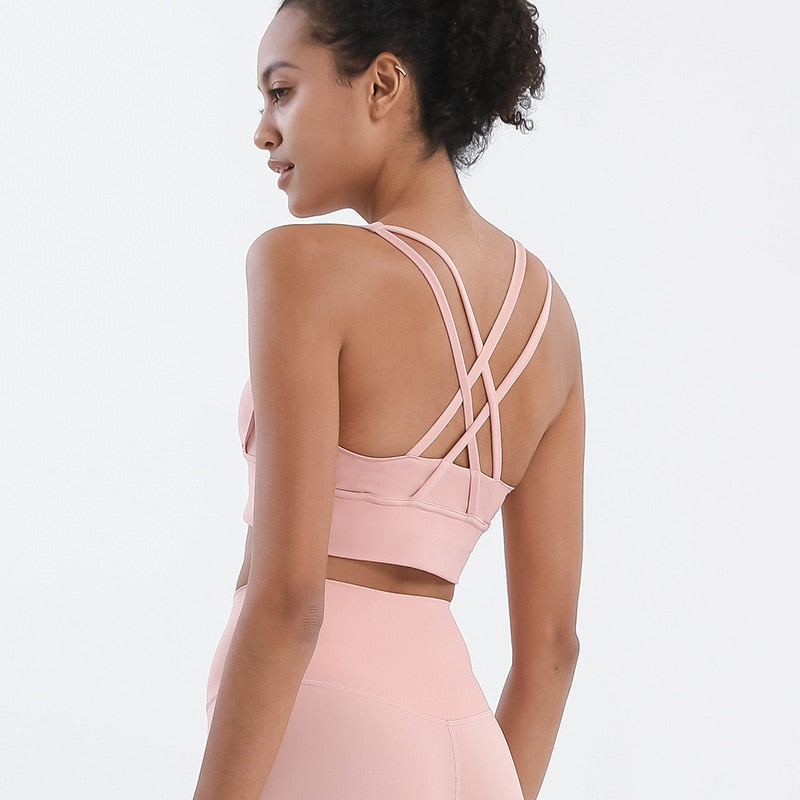
For a fuller bust, wider and adjustable straps can help distribute pressure more comfortably. A cross-back design may improve strap stability, but this feature alone does not determine the bra’s overall support level. The Cross-Back Sports Bra from Pelie is made from nylon and comes in sizes S–XL. When trying it on, check both your freedom of arm movement and how your measurements compare with the sizing information on the product page.
Fabric
The fabric needs enough stretch to allow movement while remaining stable enough to keep the underband and bust in position. For more intense exercise, also consider how the fabric manages moisture and dries after becoming damp. Rough seams, hard edges and loose wet fabric can all increase friction against the skin.
If you wear your sports bra under a close-fitting top, check the thickness of the edges and the position of the seams as well. Our guide on how to choose a bra for different clothes looks more closely at matching a bra to the cut, neckline and fabric of your outfit.
Sports bra fit test
You do not need to complete an entire workout to identify many common fit problems. Put the bra on correctly, adjust the straps and perform a few movements similar to those you expect to do during your chosen activity.
Quick fit test before your workout
- Take a deep breath and check that the band does not feel painfully tight.
- Raise both arms above your head. The underband should remain in place.
- Bend forwards and rotate your torso. Your breasts should remain contained.
- Do a few squats and check that the band does not roll.
- Move your arms in the way you will during your workout. The straps should not slip or restrict movement.
- For running or HIIT, add a few jumps and a short run on the spot.
After the test, check the position of the bra again. If it has shifted, needs repeated adjustment or has created painful pressure, change the strap adjustment or try another size or style. The movements should reflect your activity: bends and inverted positions for yoga, arm movements for weight training and jumps or running for high-impact exercise.
Sports bras for a fuller bust
A sports bra for a fuller bust needs to combine an appropriate level of support with an accurate fit around the band and cups. With a larger bust, medium support may feel more suitable even for yoga or Pilates, while running will generally require a model designed for high support.
Look for a stable band, preferably with adjustment, fuller coverage and wider straps with controlled stretch. For dynamic movement, styles with separate cups or a combination of encapsulation and compression can be useful. Bra sizing based on both band and cup size will generally allow more precise fitting than S, M or L alone.
Do not choose a smaller size simply to create stronger compression. A sports bra for a fuller bust should allow you to take a deep breath, contain the whole breast and avoid painful pressure on the shoulders or ribs.
The Seamless Sports Bra available from Pelie has removable padding, is made from polyester and comes in sizes S–XXL. Its product page does not specify a cup size or a particular support level, so compare your measurements with the available sizing and carry out a movement test appropriate for the type of exercise you plan to do.
Common sports bra mistakes
Problems with support often come from choosing the wrong size or a design that does not match the activity. Many warning signs can be spotted before your workout even begins.
- Band too loose: the back rises towards the shoulder blades and the whole bra moves when you lift your arms.
- Too much compression: taking a deep breath feels difficult, the edges dig painfully into the body or the bra already feels uncomfortable while you are trying it on.
- Cups too small: breast tissue spills out at the neckline, under the arms or underneath the bra.
- Band rolling: the underband folds over when you bend forwards or cycle. This may be caused by an unsuitable size, a band that is too narrow or a cut that does not suit your body shape.
- Support does not match the workout: a soft sports top that feels comfortable for yoga may not limit breast movement enough for running.
- Choosing only by S–XL sizing: measurement ranges differ between products, so always check the size guide for the individual style.
FAQ
Which sports bra should you choose for running?
For running, choose a high-support sports bra with a stable underband, good coverage and wider or adjustable straps. Before your workout, do a few jumps and run briefly on the spot to check breast movement and whether the bra stays securely in place.
Should a sports bra be very tight?
It should fit securely without causing pain or making it difficult to take a deep breath. Choosing a smaller size does not automatically provide better support.
What level of support is best for yoga and Pilates?
Light or medium support is usually enough for gentle yoga and Pilates. If you have a fuller bust or attend a more dynamic class, a more stable medium-support design may feel more suitable.
Which sports bra is best for a fuller bust?
Look for a stable underband, fuller cups, wider straps and a size that takes both the band and bust volume into account. For running and exercises involving jumps, choose a model intended for high-impact activity.
How can you tell if a sports bra is the wrong size?
The band may ride up or roll, breast tissue may spill out of the cups, the fabric may gape, or the straps may slip or dig into the shoulders. Having to adjust the bra repeatedly while moving is another sign that the fit may not be right.
Can you wear the same sports bra for the gym and running?
Yes, if it provides high support, fits correctly and remains comfortable during lower-impact exercises as well. A light-support style that works well for yoga or strength exercises without jumping may not provide enough support for running.
Which sports bra should you choose?
For gentle yoga and Pilates, light or medium support will usually be enough. Medium support is often a good starting point for weight training and cycling, while running, HIIT and exercises involving jumps call for high support. If your workout combines several types of movement, choose the sports bra according to the most dynamic part of the session.
Before buying, compare your measurements with the information provided for the product and carry out a short movement test. In the Pelie collection of sports bras, you can compare models with different cuts and constructions. Choose one in which the band stays in place, the breasts remain fully contained and the straps do not need constant adjustment during exercise.
Bibliography
- University of Portsmouth, Research Group in Breast Health.
- University of Portsmouth Research Portal, How the characteristics of sports bras affect their performance.
- REI Co-op, How to Choose a Sports Bra.
- SELF, What to Look for When Buying Sports Bras.


