


Plus-size lingerie is best chosen using your current body measurements and the cut of the individual garment rather than relying only on labels such as XL, 2XL or 3XL. With a bra, the underband and cup fit are particularly important; with knickers, your hips and the cut matter most; while with a bodysuit or corset, you should also consider torso length and adjustability.
Key points
- Before buying, compare your current measurements with the size guide for the specific style.
- A plus-size bra should have a stable underband, well-fitting cups and correctly adjusted straps.
- For knickers, check the rise, hip measurement and how the leg openings sit against the body.
- With a bodysuit, torso length matters too; with a corset, check the adjustment range and where the structured sections finish.
- Well-fitting lingerie should not cause pain, dig deeply into the skin or keep shifting while you walk and sit down.
How do you choose the right plus-size lingerie size?
When choosing plus-size lingerie, start with your current measurements. The size you normally buy in trousers or dresses can be a useful starting point, but close-fitting lingerie depends much more on your actual body measurements.
The most useful measurements are usually underbust, bust, waist and hips. You will not need all of them for every purchase. A bra requires different measurements from knickers, a nightdress or a corset.
How should you measure yourself?
Use a soft tape measure and keep it level around the body. It should sit against the skin without being pulled tight just to produce a smaller number.
Measure the hips around their fullest point and take the bust measurement around the fullest part of the chest. If you have not measured yourself for some time, it is worth doing it again before ordering. A difference of even a few centimetres can affect the fit, particularly with less stretchy styles.
How should you use the size guide?
Before choosing a size, check exactly which measurements are used in the product’s size chart. One pair of knickers may rely mainly on hip measurements, while another garment may require waist and bust measurements.
Do not automatically carry the same size from one lingerie style to another. Stretch, proportions and construction can differ even within the same shop.
Between two sizes?
Pay particular attention to the most fitted part of the garment. With knickers, this will usually be the hips or waist; with a bra, the underband and cups; with a nightdress, the bust and hips. Also consider the stretch of the fabric and any guidance provided for the individual product.
How do you choose a plus-size bra?
When choosing a bra, the two key starting measurements are underbust and bust circumference. They help identify a starting size, but only trying the bra on will show whether the underband and cup shape suit your body.
A style designed for a fuller bust, such as this plus-size bra, can be useful when comparing different constructions. The important point is still to check your own measurements and how the bra behaves once worn.
Underband and cups
The underband should sit roughly level around the body and remain in place when you raise your arms. If the back rides up noticeably, the band may be too loose. If it feels very tight despite being fastened correctly, another size or a different style may fit better.
The cups should contain the bust without cutting in at the neckline or sides. They should not gape significantly or form obvious wrinkles either.
For more guidance on checking the band, cups and overall support, read our guide to choosing a supportive bra for a fuller bust.
Straps
The straps help stabilise the bra, but they should not be responsible for all of the support. If you need to shorten them as far as possible just to keep the bust lifted, check the underband too.
For a fuller bust, wider straps can sometimes feel more comfortable because pressure is spread across a larger area of the shoulder. They cannot, however, compensate for an underband that is too loose.
If support during movement is particularly important, the guide to choosing a sports bra for a fuller bust explains how the underband, coverage and straps work together.
Once your bra is on, check:
- whether the underband stays in place;
- whether the cups contain the bust without digging in or gaping;
- whether the straps stay on the shoulders without cutting in deeply;
- whether you can move your arms comfortably.
How do you choose plus-size knickers?
With plus-size knickers, hip measurement is one of the most important factors, but comfort also depends heavily on the cut. High-waisted knickers will sit differently from a lower-rise or more high-cut pair even when both carry the same size label.
The waistband should not roll down whenever you sit, nor should it dig deeply into the body. Look at the leg openings as well. If most of the pressure appears around the thighs, the problem may be the shape of the cut rather than the size alone.
A style such as these high-waisted plus-size knickers is a useful example of why rise and hip fit matter alongside the size label.
If you want more support or a smoother finish under clothes, you can also compare different shapewear knickers.
For more advice on choosing underwear for close-fitting outfits, see the guide to choosing knickers under fitted clothes.
How do you choose a plus-size bodysuit?
With a bodysuit, bust, waist and hips are not the only measurements that matter. You also need to consider torso length, because the top and bottom are joined together.
A bodysuit that is too short may pull at the crotch or tug at the shoulders. If it is too long, excess fabric can gather around the waist or back. Check the fit not only in front of a mirror but also while sitting down and raising your arms.
An open-back lace bodysuit is also a good example of why the neckline, back and leg openings matter as well as the size itself.
For more detail on length and fit, see the guide explaining how to choose the right bodysuit length.
How do you choose a plus-size corset?
A plus-size corset should be chosen according to your waist measurement and the construction of the individual style. If it has lacing, hooks, a zip or another adjustable fastening, check how much adjustment it allows once worn.
The structured parts should stay in place while you walk and sit. Strong shaping does not mean a corset should cause pain or make normal movement difficult.
An adjustable plus-size corset shows why both circumference and length matter. A shorter and a longer corset can finish in very different places even on people with the same waist measurement.
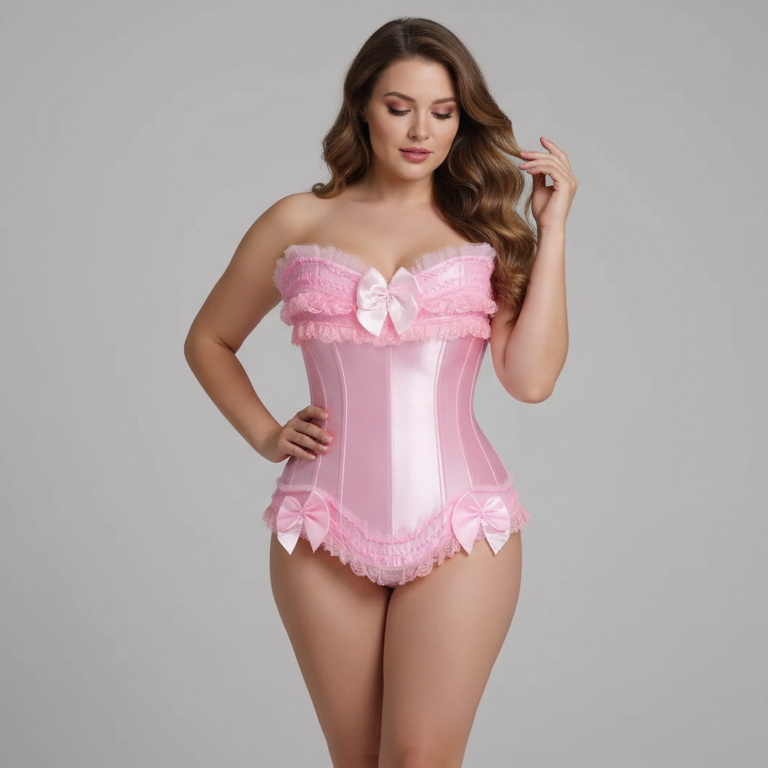
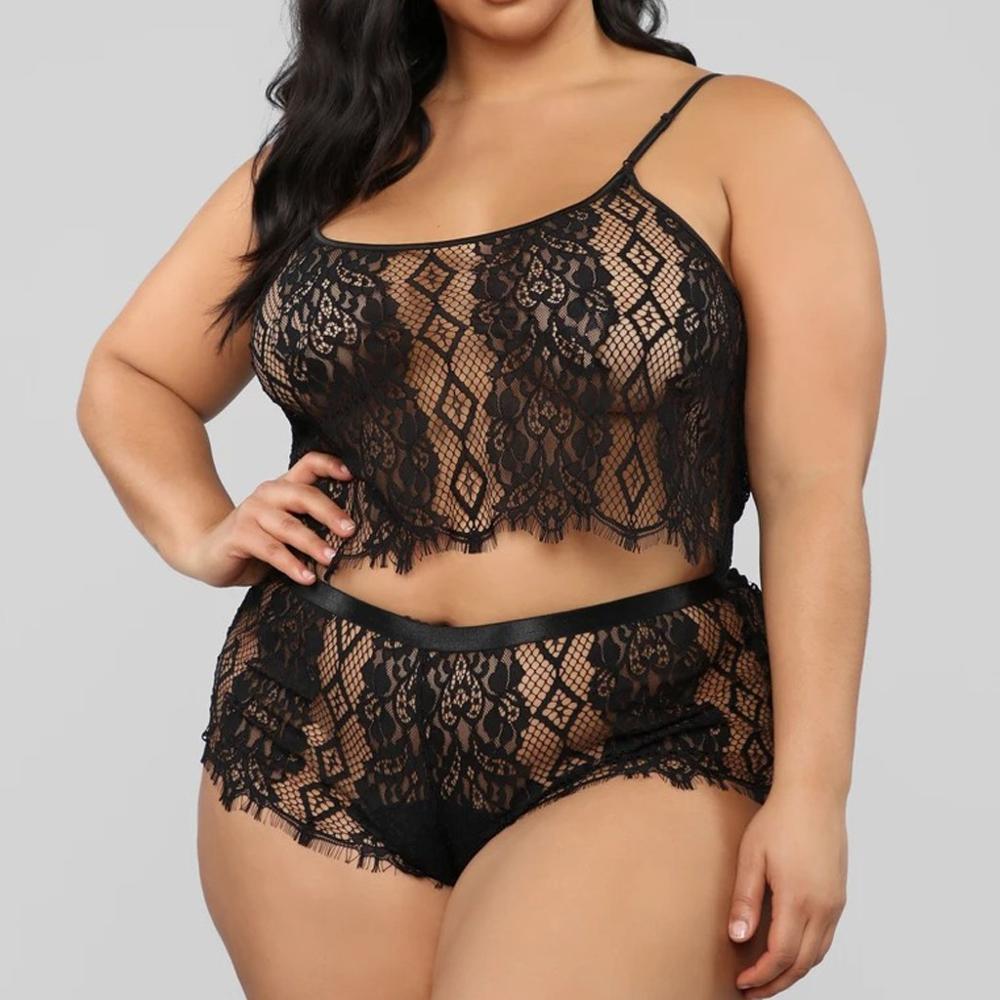
Lace, straps and more revealing cuts do not change the basic rules of fit. Sexy plus-size lingerie should still be chosen to suit the body and allow you to sit, walk and change position comfortably.
Plus-size nightwear
With women’s nightwear, you generally need more freedom of movement than with a corset or a close-fitting bodysuit. A nightdress or pair of pyjamas should not pull tightly when you sit down, turn over in bed or draw your knees up.
Plus-size nightdress
For a plus-size nightdress, check the bust, hips and length first. If the style has adjustable straps, you may be able to alter the position of the neckline, but this will not change the width of the garment.
With closer-fitting styles, also check that the fabric leaves enough room to move comfortably. A nightdress should not need to fit as tightly as a bodysuit or corset simply to follow the shape of the body.
Plus-size pyjamas
With a set, assess the top and bottom separately. Plus-size pyjamas may fit well around the bust but feel too tight across the hips, or the other way around.
Check the measurements that matter for both parts of the set. The guide to choosing women’s nightwear also explains how to compare nightdresses, pyjamas and other styles by fit, length and comfort.
What should you check when choosing stockings and tights?
With stockings and tights, do not rely only on the size you wear in other clothes. Depending on the style, the manufacturer may use thigh circumference, height or other measurements.
With hold-up stockings, the top should remain stable on the thigh without digging in or rolling down. With stockings designed for a suspender belt, length also matters so that the fabric is not overstretched once attached.
If stockings keep slipping or the top rolls down, do not automatically assume that you simply need a smaller size. The cut, stretch and shape of the top band can also affect the fit.
How can you tell if your lingerie is the wrong size?
Lingerie can look fine while you are standing still and start to feel uncomfortable after a few minutes of movement. Trying something on should therefore involve more than simply checking whether it fastens.
- Bra – the underband rides up at the back, the cups gape or the bust spills over the edges.
- Knickers – the waistband keeps rolling, the leg openings dig into the thighs or the fabric shifts while walking.
- Bodysuit – it pulls noticeably at the crotch or shoulders, or there is excess fabric around the torso.
- Corset – the structured sections press painfully, the fastening is under excessive tension or sitting comfortably is difficult.
- Nightdress or pyjamas – the fabric pulls firmly across the bust, waist or hips when you change position.
- Stockings – they slip down, roll at the thighs or feel excessively stretched along the whole leg.
Size is not always the only issue.
If the lingerie fits well in most places but clearly digs in or gapes in one area, another cut may suit your proportions better. Simply changing size will not always solve a shape or construction issue.
Which measurements should you check?
The measurements you need depend on the type of lingerie. The table below summarises the ones that are most useful before checking the size guide for a particular style.
| Product | Measurements worth knowing | What to check once worn |
|---|---|---|
| Bra | Underbust and bust measurement | Underband position, cup fit and straps |
| Knickers | Hips and, for some styles, waist | Waistband, leg openings and whether the fabric stays in place |
| Bodysuit | Bust, waist, hips and length if provided | Pulling at the crotch, shoulders and torso |
| Corset | Waist and any other measurements listed for the style | Fastening, structured sections and lower edge |
| Nightwear | Bust, hips and length; waist for some sets | Freedom of movement when sitting and changing position |
| Stockings | Measurements listed for the style, such as thigh circumference or height | Whether the top stays in place and whether the fabric is overstretched |
How do you buy plus-size lingerie online?
When you cannot try lingerie on before buying, the most useful step is to read the product information carefully. A few minutes spent measuring yourself and comparing styles can reduce the risk of choosing an uncomfortable size or cut.
Before ordering online, check:
- your current body measurements;
- the size guide and sizes available for the particular style;
- the cut, rise, neckline and any openings;
- adjustable straps, hooks, lacing, zips or other fastenings;
- fabric stretch, if it is described;
- the length of bodysuits, corsets and nightwear if this information is provided.
Once your lingerie arrives, check the fit while moving as well. Sit down, walk a few steps and raise your arms. The garment should stay in place without constant adjustment or strong pressure.
FAQ
How do you choose plus-size lingerie online?
Take the measurements needed for the type of lingerie you want to buy and compare them with the size guide for that specific style. Do not rely only on the size you normally wear in clothes.
Is a larger lingerie size always more comfortable?
No. Lingerie that is too large can shift, gape or fail to provide enough support. Matching both your measurements and the cut is more important.
How should a plus-size bra fit?
The underband should remain roughly level and should not ride up at the back. The cups should contain the bust without obvious spillage or empty areas, and the straps should not be responsible for all of the support.
How do you choose plus-size knickers?
Check your hip measurement and, if required by the size guide, your waist as well. Once they are on, make sure the waistband stays in place and the leg openings do not dig firmly into the thighs.
How do you choose a plus-size bodysuit?
As well as the bust, waist and hips, consider torso length. If the bodysuit fits around the body but pulls strongly at the crotch or shoulders, the length may be the problem.
How do you choose a plus-size nightdress?
Check the bust, hips and length. A nightdress should leave enough room to sit and move comfortably, so it should not be fitted as closely as a bodysuit or corset.
How can you tell if lingerie is too small?
Strong pressure, rolling edges, bust spilling out of the cups, very strained fastenings and fabric pulling tightly can indicate that the size is too small or that the cut is not right for your proportions.
Bibliography
- ISO, ISO 8559-1:2017 Size designation of clothes — Part 1: Anthropometric definitions for body measurement.
- Anita, ABC doboru biustonosza.
- Anita, Fitting Guide.
- Wacoal, How Should A Bra Fit: The Ultimate Bra Fitting Guide.


