


The colour of your swimwear can noticeably change how your skin looks on the beach. White creates a strong contrast against tanned skin, neon shades draw the eye, and metallic fabrics reflect light. Still, it is not only the colour itself that matters. The exact shade, the cut of the swimsuit and your natural skin tone all affect the final result.
Key points
- White, ecru and cream give the strongest contrast against tanned skin.
- Neon colours are bold and usually look best on golden or olive-toned skin.
- Red, fuchsia and orange bring out the warmer notes in a tan.
- Turquoise and emerald create a fresh contrast without the full neon effect.
- Black, navy and burgundy look calmer and are easy to style with beachwear.
- Metallic swimwear reflects light strongly, so it does not need many accessories.
How does swimwear colour affect the way skin looks?
The most important factor is the contrast between the fabric and your skin. A light or intense swimsuit stands out more against a tan, so it can make the skin look more sun-kissed. A colour close to your skin tone gives a softer effect, but it can also blend into the skin.
Not every shade works in the same way. Bright white can make very fair skin look paler, while red or fuchsia can emphasise fresh redness after sun exposure. When choosing swimwear, it is worth looking at the colour in natural light and comparing it with your own skin tone, not only with a product photo.
Light colours with a tan

White, ecru and cream
A white strapless two-piece swimsuit gives a clean contrast against tanned skin. A strapless cut also keeps the neckline and shoulders visually open, so it works well when you want a simple, bright beach look without adding too many details near the bust.
Pure white gives a cooler and sharper contrast. Ecru, cream and ivory are softer, so they often look better on very fair skin or a light tan.
With white swimwear, lining, fabric density and size are especially important. If the fabric is stretched too much, it may give less coverage, particularly when wet.
Tip
If your skin is very fair, start with cream or warm white. Choose bright white when you specifically want a stronger contrast.
Neon and strong colours
A neon swimsuit immediately becomes the main element of a beach outfit. It is best styled with a simple shirt, a plain pareo and calm accessories. That way the colour stays bold, but the whole look does not feel random.
Fuchsia, neon pink and lime
A tie-detail adjustable bikini draws attention through both colour and shape. It works well if you want the upper part of the figure to stand out without adding extra decoration around the bust.
A bikini with decorative side straps is already more detailed. The straps and side details are enough of an accent, so it is best paired with a plain cover-up.
Lime gives a strong contrast on golden and olive-toned skin. On freshly sun-reddened skin, however, it can make uneven colour more visible. In that case, turquoise, navy or cream will usually be calmer.
Red, orange and yellow
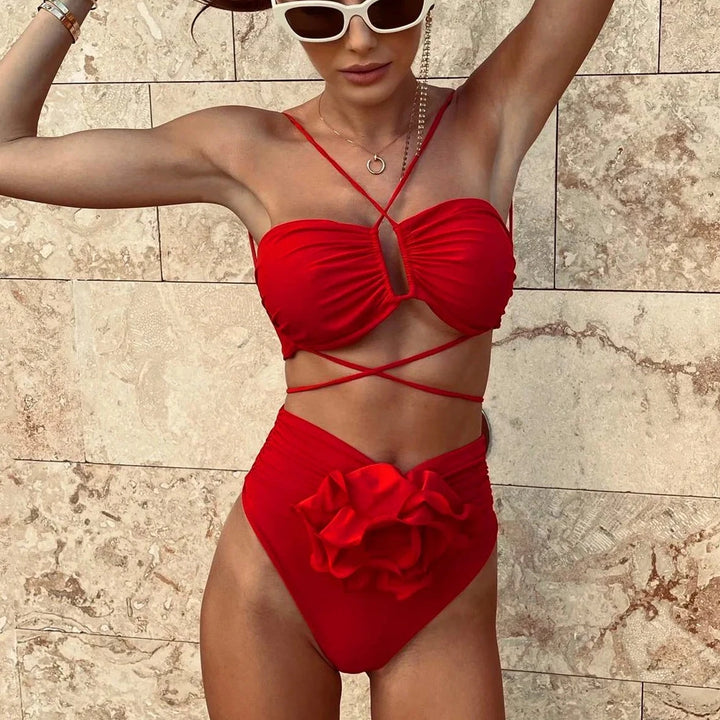
A strappy high-waist bikini brings more colour into the lower part of the silhouette and defines the waist more strongly. With this kind of cut, the shade covers more surface area than it would in a very minimal bikini.
A tie floral-detail bikini feels lighter visually, but it is still decorative. The flower and ties are already the main details, so accessories can stay simple.
A boho tie lace-up two-piece swimsuit suits warm, holiday styling and natural accessories. When working with orange tones, a softer coral or peach can be more flattering on cooler skin than a very intense carrot-orange shade.
A ruffle-trim one-piece swimsuit shows how much the cut matters alongside the colour. Ruffles draw attention to the place where they sit, so the layout of the detail is just as important as the shade itself.
Cool and dark colours
Turquoise, emerald, navy and black do not warm the skin in the same way as orange or red. They do, however, create a clear line between the swimsuit and the body. They are a good direction if you do not feel comfortable in neon colours but still want visible contrast.
Turquoise and emerald
Turquoise feels lighter and more beach-like, while emerald is deeper and calmer. Both colours stand out well against golden and olive-toned skin. Turquoise can be styled with silver or gold details, while emerald works well with cream and gold.
On very fair skin, it is usually better to avoid very muted greens. A clean turquoise or a deeper emerald tends to give a clearer contrast.
Navy, black and burgundy
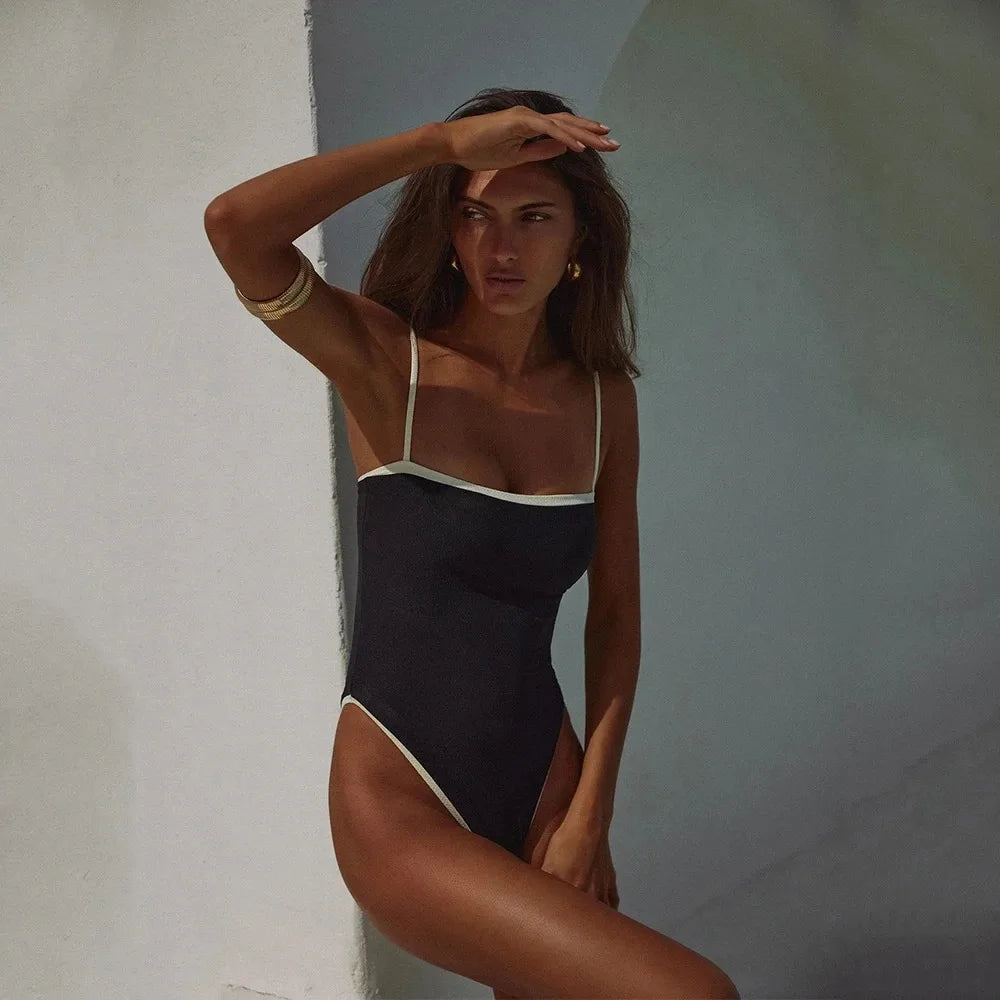
A deep-neckline one-piece swimsuit in a dark shade creates a strong, clean effect. A one-piece has a larger surface of colour than a bikini, so neckline, cut-outs and seam lines have a big influence on how the silhouette is seen.
Navy is softer than black and easy to pair with white, cream and gold. Burgundy, plum and dark raspberry look deeper than typical beach colours. On fair skin, they often work best in styles with cut-outs or a deeper neckline, which break up a large surface of dark fabric.
Gold and metallic swimwear
A shimmer two-piece swimsuit reflects light and draws attention to the body. A metallic surface can also highlight gathers, tension and folds in the fabric, so the fit is especially important.
Metallic styles work best in a simple outfit. A plain cover-up and fewer accessories help keep the balance between shine and shape.
Metallic swimwear is less versatile than matte swimwear, but it works well for photos, poolside looks or beach evenings. Before buying, check whether the fabric is flexible and whether the shine stays even when the material stretches.
Swimwear colour and skin tone
The suggestions below are a starting point, not a strict colour analysis. Two similar swimsuits can look very different depending on saturation, light and your natural undertone.
| Skin tone | Colours that often create good contrast | What to watch out for |
|---|---|---|
| Fair skin without a tan | Cream, navy, turquoise, emerald, coral | Bright white, very pale yellow and sharp neons can emphasise paleness |
| Light golden tan | White, fuchsia, turquoise, orange, gold | Beige and peach shades close to the skin tone can blend in |
| Olive-toned tan | Lime, fuchsia, emerald, white, metallic gold | Muted beiges and greys can look flat |
| Deep tan | White, yellow, turquoise, red, neon pink, gold | Very dark colours need a light detail or a defined cut |
| Skin reddened after sun exposure | Navy, turquoise, emerald, cream | Red, orange and hot pink can make redness more visible |
When shopping online, compare photos taken in different types of light. A colour in a studio image may look different on the beach or by the pool.
Colour and swimsuit cut
The same shade gives a different result in a small bikini and in a more covered one-piece swimsuit. The larger the surface of fabric, the more strongly the colour affects the whole silhouette.
Bikinis and colour placement
A bikini lets you combine different shades on the top and bottom. A lighter top draws attention to the bust, while a stronger colour on the bottom makes the hips more noticeable. If you want to work with proportions, the guide on choosing a women’s bikini for your figure may be useful.
One-piece swimsuits and high-waisted bottoms
A one-piece swimsuit creates a large surface of colour, so dark and metallic shades are more visible than they would be in a bikini. Cut-outs, ruffles and contrast trims can break up a single block of fabric.
High-waisted bottoms show more colour around the waist and hips. If the bottom is light or neon, that area will draw more attention. A darker bottom and lighter top move the focus upwards.
Swimwear colour and beachwear
With a strong swimwear colour, a calmer layer on top usually works best. A plain swimsuit gives you more freedom and can be styled with a patterned pareo, dress or kimono. You can find more examples in the guide to choosing women’s beachwear.
| Swimwear colour | What to wear over it? | Overall effect |
|---|---|---|
| White or cream | Beige, woven details, light pareo | Light and calm |
| Neon | White shirt, plain cover-up, simple sandals | Bold, without too many colours |
| Red | White, black, gold details | Classic and strong |
| Turquoise or emerald | Cream, white, natural accessories | Fresh and contrasting |
| Black | Light shirt, woven bag, gold | Simple and elegant |
| Metallic | Plain cover-up, little jewellery | Noticeable, but not overloaded |
Prints and colour combinations
A printed swimsuit is best judged by its dominant colour. That shade will have the strongest effect on how the skin looks and will also guide your accessories. A small print gives a calmer result, while large, high-contrast patterns draw more attention to the body.
Safe colour combinations
- white and gold,
- turquoise and cream,
- red and white,
- fuchsia and beige,
- lime and white,
- black and gold,
- emerald and natural woven accessories.
Colours to be careful with
A difficult colour is not automatically a bad choice. The problem appears when the shade blends into the skin or makes redness more obvious.
Beige too close to the skin
It can blend into the body and weaken the line of the swimsuit.
Very pale pastel yellow
On very fair skin it can look weak. A clearer yellow usually gives a stronger contrast.
Grey
It is neutral, but it rarely makes a tan stand out strongly. It works better with a defined cut or a contrast detail.
Muted brown
It looks best when it is clearly different from the skin tone.
Red on irritated skin
It can make redness and uneven colour after sun exposure more visible.
Tanning and skin protection
The colour of a swimsuit can flatter a tan, but it does not protect exposed skin from UV radiation. On the beach, you still need sunscreen, shade, sunglasses, a hat and clothing that covers the body when needed.
Important
It is not worth staying in the sun for longer just to make a particular swimwear colour look better on your skin.
How to choose swimwear colours for a holiday
You do not need several almost identical swimsuits. A more practical option is a small set in which every piece has a different role. A light style gives contrast, a strong colour draws attention, and a dark swimsuit is easy to pair with different cover-ups.
A practical colour set
- white, cream or another light shade for visible contrast,
- fuchsia, red, turquoise or lime as the stronger colour,
- black, navy or emerald for calmer outfits,
- metallic or gold for photos or poolside plans,
- one plain cover-up that can be worn with several swimsuits.
What to avoid
Buying only because a colour is trending
A shade you do not feel good in will quickly end up at the bottom of your suitcase.
Choosing white swimwear without checking coverage
With light fabric, look at the lining, fabric density and fit.
Pairing neon with too many strong accessories
An intense swimsuit is already the main accent of the outfit.
Choosing a shade too close to your skin tone
Beige, peach and light brown need a visible difference from your complexion.
Ignoring the cut
Colour will not compensate for a top that moves, bottoms that dig in or the wrong size.
FAQ
Does a white swimsuit always flatter a tan?
White usually creates a strong contrast, but on very fair skin it can emphasise paleness. Cream, ivory or warm white may work better in that case.
How can I check a swimwear colour before buying online?
Compare photos taken in different light, read the shade description and look for customer photos if they are available. A colour on screen can look different in natural outdoor light.
Can bikini tops and bottoms be different colours?
Yes. A lighter or stronger top draws attention towards the bust, while a bolder bottom highlights the hips. The easiest approach is to combine one strong colour with one neutral colour.
Which colour is best if my skin is red after the sun?
Navy, turquoise, emerald or cream will usually be calmer. Red, orange and hot pink can make redness more visible.
Colourful swimwear at Pelie.co.uk
Before choosing a colour, think about where you will wear the swimsuit, which beachwear you want to pair it with and which part of the figure should draw the eye. Only then compare the cut, material, lining, adjustability and fit.
At Pelie.co.uk you can find light, neon, red, dark and metallic styles. Colour can flatter a tan, but comfort still depends on the right cut and the right size.
Bibliography
- American Academy of Dermatology Association, What to wear to protect your skin from the sun.
- The Skin Cancer Foundation, Your Daily Sun Protection Guide.


