


Brazilian knickers have more coverage at the front and a more revealing cut at the back. They show more of the bottom than classic knickers but provide more coverage than a thong. They can be low-rise, mid-rise or high-waisted, while how much they show under clothes also depends on the fabric, edge finish and fit.
Key points
- Brazilian knickers provide less coverage at the back than classic knickers but more than a thong.
- The term “Brazilian” mainly describes the cut at the back, not how high the waistband sits.
- Under fitted clothes, smooth, seamless styles and flat edges are usually less noticeable.
- The right size should sit comfortably at the waist and leg openings without digging in, wrinkling or shifting as you move.
What are Brazilian knickers?
Brazilian knickers are a style that provides partial coverage across the bottom. The back is narrower and more revealing than classic knickers but noticeably wider than a thong. At the front, the shape can look quite similar to a classic brief or bikini-style knicker.
The exact proportions vary between brands. Some Brazilian styles are cut much higher across the bottom, while others are only slightly more revealing than classic knickers. It is therefore worth checking the product images, particularly the view from the back.
A high-cut leg does not automatically make a pair of knickers Brazilian. The defining feature is mainly the amount of coverage across the bottom. The width at the sides and the height of the waistband can both vary.
Pelie’s Ribbed Lace-Trim Brazilian Briefs are one example of the shape, combining a Brazilian cut with ribbed fabric and a lace trim.
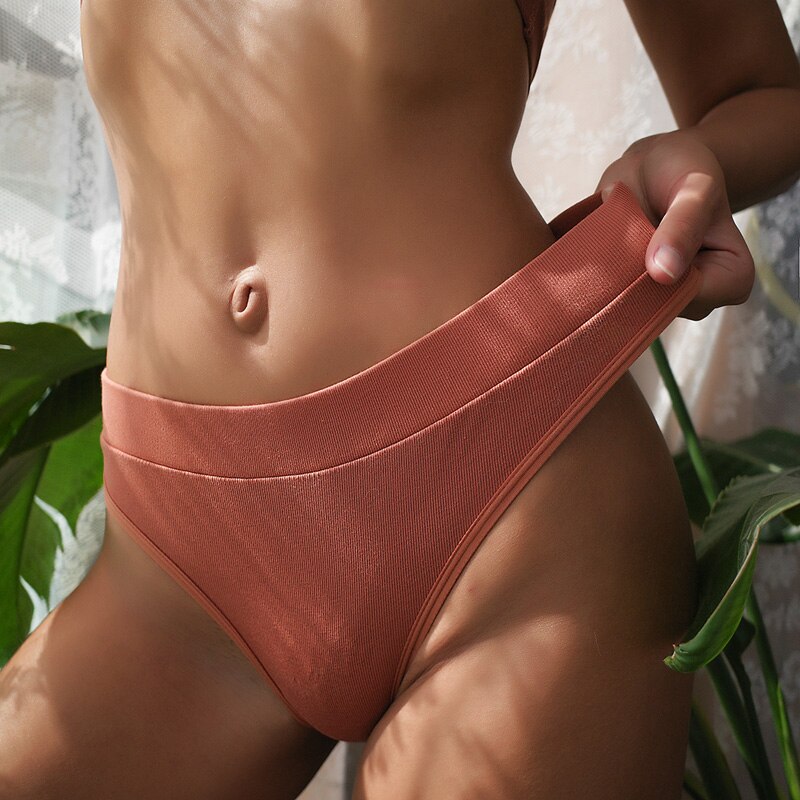
Check the back of the style.
Brands do not always use underwear terms in exactly the same way. If a product page only shows the front, the leg cut alone will not tell you how much coverage the knickers provide at the back.
Brazilian knickers vs classic knickers
The clearest difference is at the back. Classic knickers usually cover more of the bottom, whereas Brazilian knickers are cut further in and leave more of the lower part exposed.
Both styles can come in low-rise, mid-rise and high-waisted versions. Brazilian knickers are therefore not simply classic knickers with a lower waistband. The main difference is the shape of the back.
If you prefer fuller coverage, compare them with classic knickers. A Brazilian cut may suit you if you like the more covered front of traditional knickers but prefer less fabric across the bottom.
That does not mean every Brazilian style will disappear under clothes. Thick elastic, raised lace or a size that is too small can still create visible lines, regardless of the cut.
Brazilian knickers vs thongs
A thong has a very narrow back, often reduced to a slim strip of fabric, so it provides the least coverage of the three styles. Brazilian knickers leave more fabric across the bottom.
They sit between fuller classic knickers and a much more minimal thong. This makes them an option if you want a more revealing back without switching to a thong.
If reducing the usual knicker line across the bottom is your main priority, you can compare Brazilian styles with thongs. The fabric still matters, though. A lace thong can show through fine or closely fitted fabric even though there is very little material at the back.
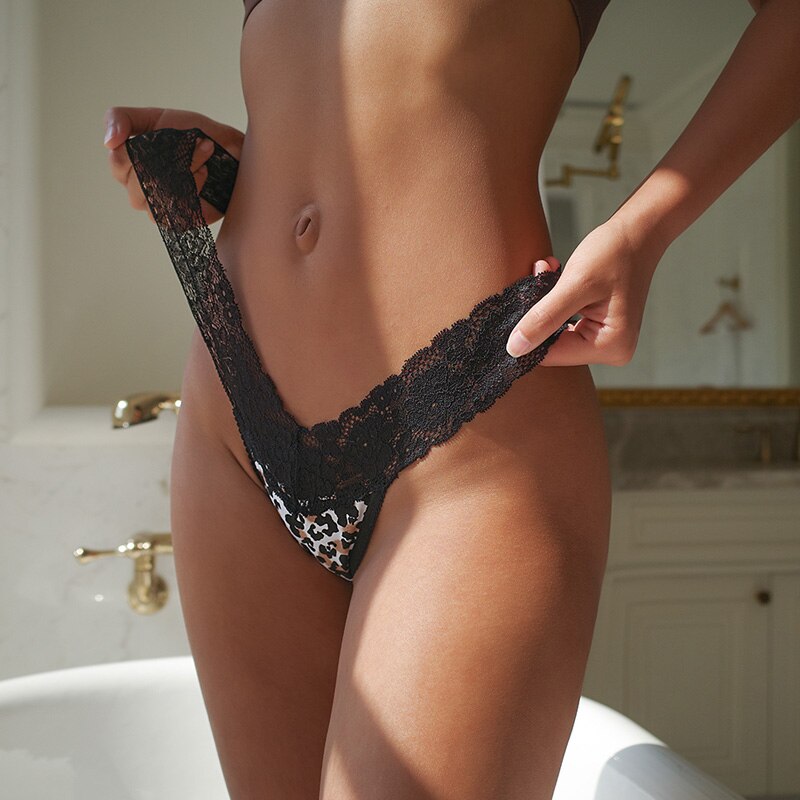
Low-rise or high-waisted Brazilian knickers?
The rise tells you where the waistband sits on the body. It does not change whether a style is Brazilian, because the term mainly refers to the cut at the back. You can therefore choose the rise according to your own preference and the trousers or skirts you wear.
Low-rise Brazilian knickers
A low-rise style sits lower on the hips and can work well under low-rise trousers or skirts. Check how it behaves when you move, though. A waistband that is too loose may shift, while one that is too tight can create a more noticeable line across the hips.
If you want to compare how a genuinely low-rise cut sits, Pelie’s low-rise cotton thongs are another example of underwear designed to sit lower on the hips. They are a different cut from Brazilian knickers, but useful when comparing rise and waistband position.
High-waisted Brazilian knickers
High-waisted Brazilian knickers sit closer to the natural waist while keeping the characteristic more revealing cut at the back. They can work particularly well with high-waisted trousers and skirts because the top edge follows a similar line.
Under thin fabric, also check the thickness of the waistband and edge finish. A high waistband with thick elastic may be more noticeable than a lower style with very flat edges.
Mid-rise Brazilian knickers
A mid-rise waistband sits between the two and can work well with trousers and skirts that have a standard rise. The terms low-rise, mid-rise and high-waisted are only a general guide, so always check the product images and size information rather than relying on the label alone.
Fabric and finish
The same cut can behave very differently under clothes depending on the fabric. Thickness, stretch, texture and the finish around the waistband and leg openings all matter. Fabric and coverage should therefore be considered separately.
Cotton Brazilian knickers
Cotton styles are commonly chosen for everyday underwear. A small amount of stretch fibre can help the material follow the body, but the exact composition should always be checked on the individual product page.
Traditional stitching or thicker elastic can still show under very fine trousers. The same principle applies to a Classic Smooth Cotton Thong: having minimal fabric across the bottom does not automatically make every edge invisible.
Lace Brazilian knickers
Lace can be fine and relatively flat or much more textured. The more raised the pattern and the thicker the trim, the more likely it is to show through fitted clothing.
If you like this finish, Pelie’s lace knickers collection is useful for comparing different textures and edge details. Not every pair is Brazilian, so the point here is to compare how the material itself may behave under clothes.
Seamless Brazilian knickers
“Seamless” can refer to underwear made with fewer traditional seams or to styles finished with very thin, flat edges. Seamless Brazilian knickers can help reduce visible lines, but the label does not guarantee a completely invisible finish.
Size, colour, fabric thickness and the exact position of the edge across the bottom still matter. If discretion under fitted clothing is your priority, compare different seamless knickers and look closely at the waistband, sides and leg openings as well as the main fabric.
Do Brazilian knickers show under clothes?
A Brazilian cut uses less fabric at the back than classic knickers, but it still leaves an edge running across part of the bottom. Under some outfits that edge may barely show, while under others it can create a visible line.
The best test is to try the underwear with the clothes you actually plan to wear and check the result while moving rather than only standing still in front of a mirror.
Under trousers and leggings
Under leggings and lightweight fitted trousers, start with smooth Brazilian knickers with thin, flat edges. Raised lace, decorative straps and thick elastic are more likely to show through the outer fabric.
If you still get a visible line, changing the cut may work better than simply changing the size. A well-fitting thong, for example, removes the usual edge running across the bottom.
Under dresses and skirts
With a loose skirt or a thicker fabric, the difference between classic knickers, Brazilian knickers and thongs usually matters less. A fitted dress in fine jersey is more likely to reveal seams, edges and texture.
Look at the cut, colour, stitching and whether the waistband or leg openings dig into the skin. For more outfit-specific advice, see our guide on which knickers to choose for different outfits.
Quick check under clothes
- Put on the knickers and the outfit you plan to wear with them.
- Check the result from the front, side and back.
- Sit down, bend forwards and walk around for a moment.
- Look separately at the waistband, leg openings and any texture showing through the fabric.
How should Brazilian knickers fit?
Choose your size using your hip measurement and the size guide for the individual product. If the product also gives a waist measurement, check that too. An S, M or L does not necessarily correspond to exactly the same measurements in every style.
Do not choose a smaller size simply to make the knickers sit more tightly against the body. A pair that is too small can dig into the skin and make the edges more noticeable under clothing.
Once they are on, check four areas:
- the waistband lies flat and does not roll;
- the leg openings do not dig in when you stand or sit;
- the back stays in place rather than bunching or rolling into a narrower strip;
- the front lies smoothly without obvious excess fabric or wrinkling.
If the waistband and leg openings feel tight, try the next size up. If the knickers gape, slip or wrinkle, compare a smaller size or a different cut. Fit also depends on the stretch of the fabric and the proportions of the style, not just the size on the label.
Brazilian knickers, classic knickers or thongs?
The table below compares the typical level of coverage provided by each style. Individual products can vary, so always check the description and back view before choosing.
| Style | Coverage at the back | Rise | When to choose it | Under fitted clothing |
|---|---|---|---|---|
| Classic knickers | The fullest of the three | Low, mid or high | If you prefer more coverage across the bottom | The wider back edge may create a visible line |
| Brazilian knickers | Partial, between classic knickers and a thong | Low, mid or high | If you want less coverage without moving to a thong | Smooth versions with flat edges are usually the least noticeable |
| Thong | Minimal | Low, mid or high depending on the style | If you prefer the least possible fabric at the back | No wide edge across the bottom, although the waistband and sides can still show |
FAQ
Are Brazilian knickers the same as classic knickers?
No. They can look similar from the front, but Brazilian knickers are more revealing at the back and provide less coverage across the bottom. As terminology can vary between brands, check the product images as well as the name.
What is the difference between Brazilian knickers and a thong?
Brazilian knickers leave more fabric across the bottom and provide more coverage. A thong has a much narrower back and leaves most of the bottom uncovered.
Do Brazilian knickers show under clothes?
They can, particularly if they have raised lace, thick elastic or edges that dig into the skin. Under fine, fitted fabrics, smooth styles with flat edges are usually more discreet.
Can Brazilian knickers be high-waisted?
Yes. “Brazilian” mainly describes the cut at the back, so the waistband can sit low, at a mid-rise or higher on the waist.
How do you choose the right size of Brazilian knickers?
Measure around the fullest part of your hips and compare the result with the product size guide. Well-fitting Brazilian knickers should not dig in, gape or shift noticeably while you move.
Can you wear Brazilian knickers every day?
Yes, if you like the level of coverage and the fit works for you. Everyday comfort also depends on the fabric, edge finish and whether the knickers stay in place without needing constant adjustment.
How do you choose the right Brazilian knickers?
Start with the amount of coverage you prefer. If classic knickers feel too full but you do not want to wear a thong, Brazilian knickers provide a useful middle ground. Then choose the rise to suit your wardrobe, consider the fabric and compare your measurements with the size guide.
In Pelie’s collection of women’s knickers, you can compare different levels of coverage, rises, fabrics and finishes. Before choosing, always check the back view as well as the front. Two pairs that look very similar from the front can sit quite differently across the bottom.
Bibliography
- Triumph, Brazilian Knickers: The Cheeky Cut Explained.
- Wacoal, Panty Styles.
- Tezenis, Brazilian Panties for Everyday Wear.


