


A warm dressing gown for women should suit both the time of year and the way you plan to wear it. During autumn and winter, a thicker, more covering style is usually the better choice, while a lightweight satin robe works well over a nightdress or lingerie. Before buying, consider the fabric, length, sleeves and fit, especially if you'll be wearing it over your pyjamas.
At a glance
- For colder months, choose a thicker dressing gown with good coverage.
- Plush and fleece fabrics are generally better suited to keeping warm than lightweight satin.
- A longer dressing gown covers more of your legs, but length alone doesn't determine how warm it will be.
- Cotton and velour can be comfortable for everyday wear, although warmth depends on the fabric's thickness and construction.
- Check the sleeve length, belt, pockets and room for your pyjamas before choosing a size.
Which dressing gown fabric is the warmest?
If you're buying a dressing gown for autumn or winter, fabric thickness and coverage matter more than appearance alone. A thin robe may feel soft against your skin, but it won't necessarily provide the warmth of a thicker design with long sleeves and more coverage around the legs.
Plush and fleece
Plush dressing gowns are particularly appealing if you want something soft and cosy to wear on colder mornings. The soft plush dressing gown from Pelie has a relaxed, comfortable fit and comes in several colours. It's worth checking the available sizes and product details to see how it will fit over your usual nightwear.
Fleece is another popular choice for colder weather. However, fleece fabrics vary in thickness, density and construction, so two dressing gowns made from fleece may feel quite different. The fabric name alone isn't enough to judge how warm a particular dressing gown will be.
Cotton and velour
A cotton dressing gown can be a comfortable choice for regular wear, particularly if you prefer fabrics that aren't especially fluffy or bulky. Cotton comes in different weights and constructions, so a thicker cotton dressing gown is generally more suitable for colder weather than a lightweight cotton cover-up.
Velour has a soft, smooth pile and a more polished appearance. It can feel pleasant against the skin, but its insulating properties depend on the fabric's construction and thickness. Not every velour dressing gown will be warm enough for winter.
Don't judge warmth by appearance alone.
A fluffy surface can make a dressing gown look warm, but it's still important to check the thickness, length and fabric information provided for the individual product.
Satin dressing gowns: when are they a good choice?
Satin styles serve a different purpose from thick plush or fleece dressing gowns. Within Pelie's collection of women's robes and kimonos, lighter designs offer a smooth, decorative layer that can be worn over pyjamas, a nightdress or lingerie.
If staying warm is your main priority, a thin satin robe probably isn't the best choice. It's better suited to occasions when you want something lightweight, comfortable and easy to slip on. Satin also refers to the fabric's weave or finish, rather than necessarily meaning that an item is made from silk.
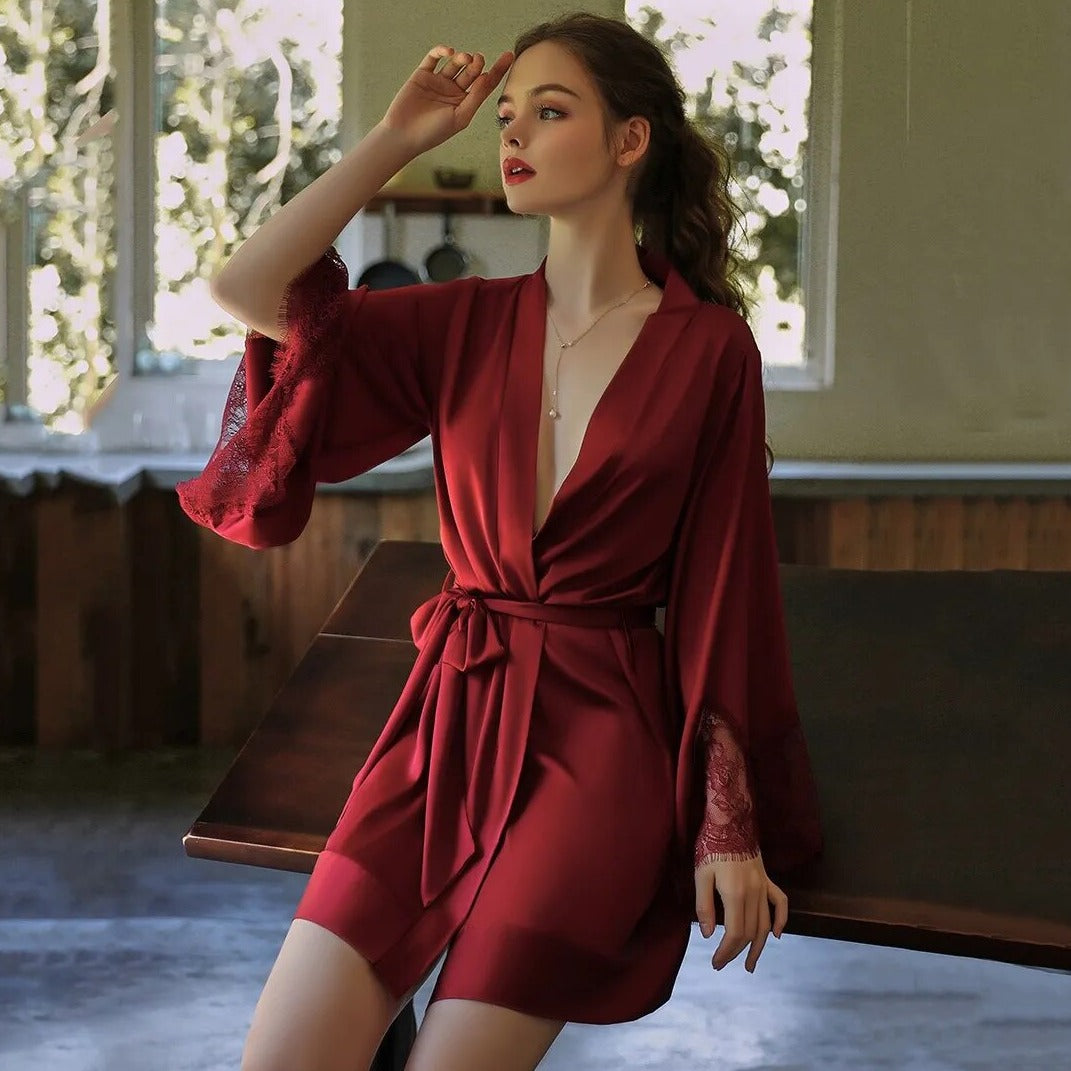
For example, a satin robe with lace detailing offers a more decorative look, with adjustable features to help with the fit. It's a suitable style to wear over lightweight nightwear, but serves a different purpose from a thick winter dressing gown.
Long or short dressing gown: which should you choose?
A long women's dressing gown covers more of your legs, which can make it more comfortable during autumn and winter. If you tend to feel the cold, look for a design that combines a longer length, thicker fabric and full-length sleeves.
A short dressing gown may be more practical in a well-heated home, while getting ready in the morning or when you only need an extra layer for a few minutes. It generally feels less bulky and leaves your legs freer to move.
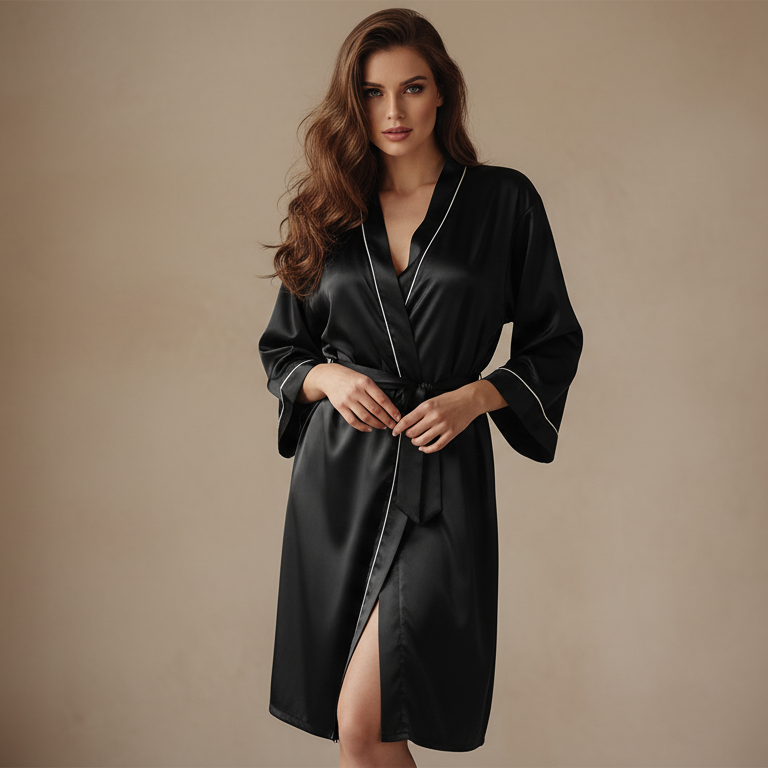
Length doesn't tell you everything about warmth. A long satin robe covers more of your legs but remains a relatively lightweight layer. The Pelie model has a comfortable fit and is made from a viscose and spandex fabric with a satin finish. If warmth is your main concern, consider the material as well as the length.
What makes a dressing gown comfortable to wear?
A dressing gown should allow you to walk, sit down and move around the house comfortably. If you plan to wear it over pyjamas, you'll need a little more room than you would in ordinary clothing. A style that fits closely over a nightdress may feel restrictive when worn over a thick winter pyjama set.
Hood or collar
Hoods are often found on thicker dressing gowns. They provide extra coverage around the head and neck, which can be useful on cold mornings.
A classic collar or shawl collar is more versatile and can work on both warm and lightweight designs. When choosing, think about how much coverage you prefer around your neck and shoulders.
Sleeve length and shape
Long sleeves are usually more practical in autumn and winter because they keep more of your arms covered. However, the cuffs shouldn't fall over your hands or get in the way when you're making breakfast, washing your hands or getting ready.
Wide, kimono-style sleeves are common on lighter robes. They allow plenty of movement but can also leave your arms more exposed to cool air. If warmth is important, a more closely fitted sleeve may be the more practical choice.
Belt and pockets
A belt should let you adjust the dressing gown comfortably around your waist. Once tied, the front panels should overlap enough to stay in place as you walk around.
Pockets are especially useful if you spend several hours in your dressing gown. They provide somewhere to keep small items close at hand. On a lightweight robe worn mainly in the bedroom, pockets may be less important.
How to choose the right dressing gown size
A dressing gown should have a little more room than your usual clothes. When the belt is tied, the front panels should overlap comfortably, with enough space underneath for your pyjamas or nightdress.
When shopping online, check the measurements for the individual style rather than relying only on your usual clothing size. Pay particular attention to the bust measurement, overall width and length. If you'll be wearing thick pyjamas underneath, allow for that extra layer when choosing your size.
Going several sizes larger isn't necessarily more comfortable. Sleeves that are too long or a hem that's excessively wide can get in the way as you move around the house. The aim is to find a dressing gown that feels roomy without being cumbersome.
Which dressing gown is best for everyday wear?
Think about when you'll wear your dressing gown most often. For cold mornings or evenings, a thicker, more covering style works well over warm pyjamas. A lightweight robe, on the other hand, can be worn with women's nightwear such as a nightdress or a lighter pyjama set.
After a bath or shower, the priorities are slightly different. You'll need fabric that feels comfortable against damp skin and, if you want to dry yourself, absorbs moisture effectively. Cotton is an absorbent fibre, but the fabric's construction matters too. A cotton towelling bathrobe is generally more useful for drying off than a thin satin robe.
If you want something comfortable to wear around the house, try pairing your dressing gown with pyjamas, soft socks or relaxed loungewear. A lighter satin style, meanwhile, works well over a delicate nightdress or lingerie set.
Choose your dressing gown according to how you'll use it:
- For autumn and winter: a thicker style with long sleeves and plenty of coverage.
- For cold mornings: a soft plush or fleece dressing gown that covers more of your body.
- For everyday wear at home: a comfortable fit, an adjustable belt and practical pockets.
- After a bath or shower: an absorbent fabric suitable for damp skin.
- For the bedroom: a lightweight satin robe or another thin style to wear over nightwear.
How to wash and care for your dressing gown
Always follow the care instructions on the garment's label. Plush, fleece, cotton and satin fabrics may need different washing temperatures, programmes and drying methods.
When washing delicate robes, be careful with zips, hooks and other fastenings that could catch on the material. If your dressing gown has lace or embroidery, check whether hand washing or a protective laundry bag is recommended.
For fluffy or thick dressing gowns, also check whether the manufacturer permits tumble drying or the use of fabric conditioner. Heat and certain laundry products can affect the texture or appearance of some fabrics.
FAQ
What is the best dressing gown for winter?
For winter, choose a thicker dressing gown with long sleeves and plenty of coverage. If your legs often feel cold, a longer style may be more comfortable. Fabric thickness and fit are just as important as length.
Are long dressing gowns warmer?
Long dressing gowns cover more of your legs, but length alone doesn't guarantee warmth. A thin satin robe will generally provide less insulation than a thick plush dressing gown, even if it's longer.
Is a plush or fleece dressing gown better?
Both can work well in colder months. Compare the thickness, length and fit of individual styles rather than judging them by the fabric name alone. Check the product information for details about the material.
Is a satin dressing gown suitable for winter?
A typical lightweight satin robe is better suited to wearing over nightwear than keeping warm on cold mornings. If warmth is your priority, a thicker, more covering dressing gown is generally the better choice.
What type of dressing gown should you wear after a shower?
Choose an absorbent fabric that feels comfortable against damp skin. A cotton towelling bathrobe is usually more practical for drying yourself than a lightweight satin robe.
How should a dressing gown fit?
It should feel comfortable over your usual nightwear, with enough room to move freely. When tied, the front panels should overlap without pulling, and the sleeves shouldn't get in the way of your hands.
Sources and further reading
- Polartec, Fleece Series.
- CottonWorks, Fibers Booklet.
- CottonWorks, Cotton Home Buyer's Guide.
- Textile School, Satin Weave: Structure, Move Numbers and Satin vs Sateen.


